






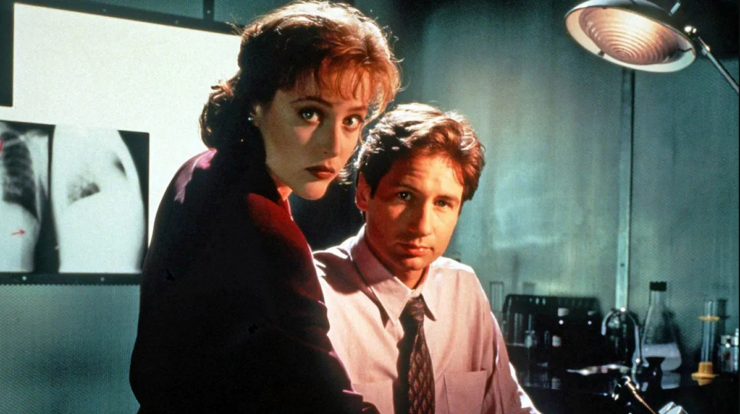
The X-Files didn’t invent the “Monster of the Week” format. Series like The Outer Limits, Kolchak: The Night Stalker, and even Scooby-Doo had already experimented with weekly villains when The X-Files debuted in 1993. What ultimately made The X-Files popularly associated with that term (besides the many series it eventually influenced) was the contrasting nature of its MOTW episodes. The show hooked viewers with its serialized conspiracy narrative and filled the remainder of its run with largely one-off episodes that saw Agents Mulder and Scully investigate a seemingly endless series of unexplained events that usually revolved around some kind of monster. As the age of serialized storytelling on television evolved, it became easy to look back on such stories as necessary filler in the age of 20+ episode seasons.
Yet, those MOTW episodes feel more magical than ever because they are the antithesis of modern serialized storytelling styles. The X-Files “mythology” episodes could often let you down. Towards the end, they usually did. But when this show decided to throw random spooky bullshit at you, it did so with glee. Either you were going to watch a generational TV masterpiece or something inexplicable that escaped the light of a frustrated writers’ room and somehow found its way onto television. We simply do not have enough of that glorious creative chaos in the buttoned-upped “prestige” era of television.
But mostly, those episodes were about the monsters. That’s who we’re here to celebrate today. So while an episode’s overall quality often impacted how memorable the monster itself was, these rankings are ultimately based on the creatures themselves. Be they men, bugs, mutations, or aliens, they were all monsters who deserved so much more than a mere week.
15. The Were-Monster
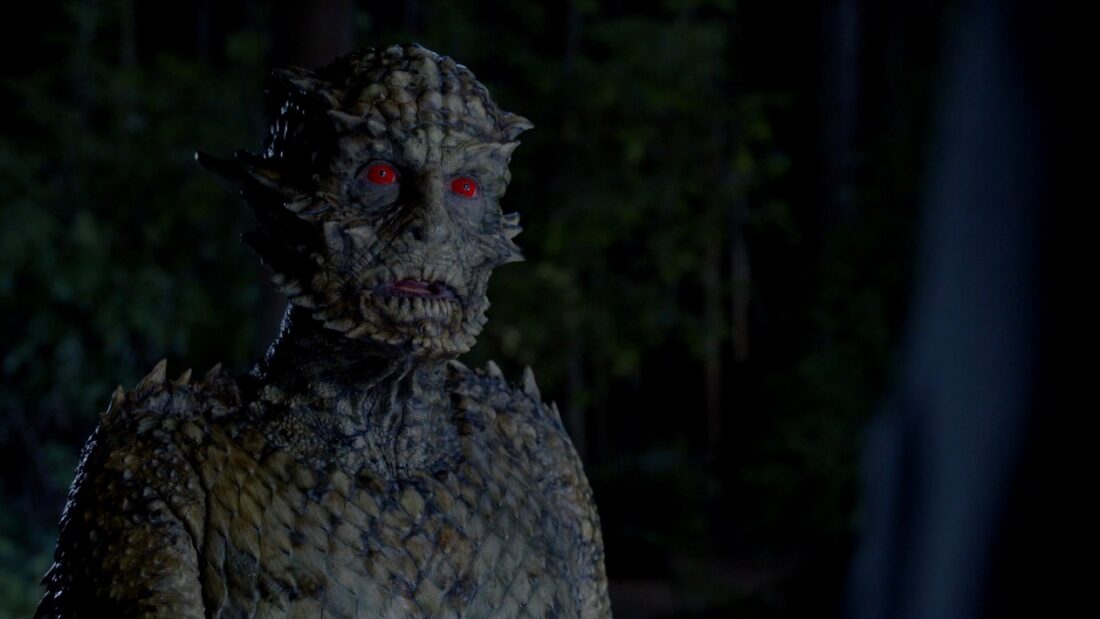
(“Mulder & Scully Meet the Were-Monster” Season 10, Episode 3) The idea that the 10th and 11th seasons of The X-Files were strictly bad is a monster unto itself. It’s a conspiracy worthy of Mulder’s paranoia. Those seasons weren’t all bad; they were just mostly bad. But as any X-Files fan knows, the series’ darkest hours often hide gems waiting to be discovered years later by those patient enough to look for them. And for all their flaws, those revived seasons featured a few genuinely great monster-of-the-week episodes.
“Mulder & Scully Meet the Were-Monster” is undoubtedly the best of those episodes. Written by the legendary Darin Morgan (the man behind some of The X-Files’ most memorable stories), “Were-Monster” is a comedic exploration of Mulder’s growing disillusionment with the often blind faith in the unexplained that propelled his character throughout much of the show. The episode is a giant Easter egg, and at the center of it all is the Were-Monster: a seemingly charmingly conventional monster who, like Mulder, is in the midst of an existential crisis. The Were-Monster, much like the rest of the episode, is a classically amusing terror that takes us back to the show’s best days while making the most of modern sensibilities to feel truly evolved. If only we could say the same of more of the revival episodes.
14. Gerry Schnauz
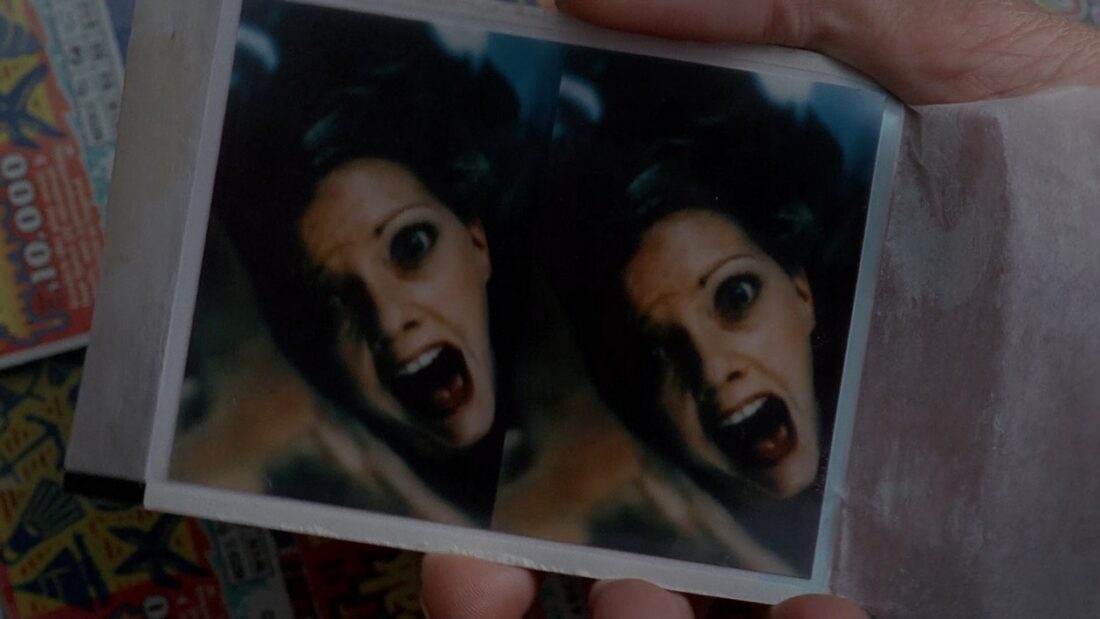
(“Unruhe” Season 4, Episode 4) While not the fourth season’s most disturbing episode (we’ll get there), “Unruhe” is one of those fundamentally unnerving adventures people tend to forget about when remembering The X-Files‘ best, and often most wonderfully absurd, episodes. But what makes this episode, and its villain, a serial killer named Gerry Schnauz, work is the way it gave writer Vince Gilligan an excuse to explore some primal fears.
Inspired by tales of real-life serial killers and the common fear of dentists and dentist chairs (dispense with the pleasantries and double my Novocaine, you floss peddler), Gilligan utilizes Schnauz as a vehicle for a series of upsetting visuals and concepts. The scene where he hides under Scully’s car with a syringe, his fondness for administering lobotomies, the way he runs away on stilts (what the fuck was that, Vince?)… Schnauz is every dark thought you’ve ever tried to push out of your mind placed in the body of a serial killer even Ryan Murphy couldn’t love. His ability to take photographs of victims which represent the most troubling thoughts in his own mind is just the sci-fi cherry on top.
13. The Camouflage Creatures
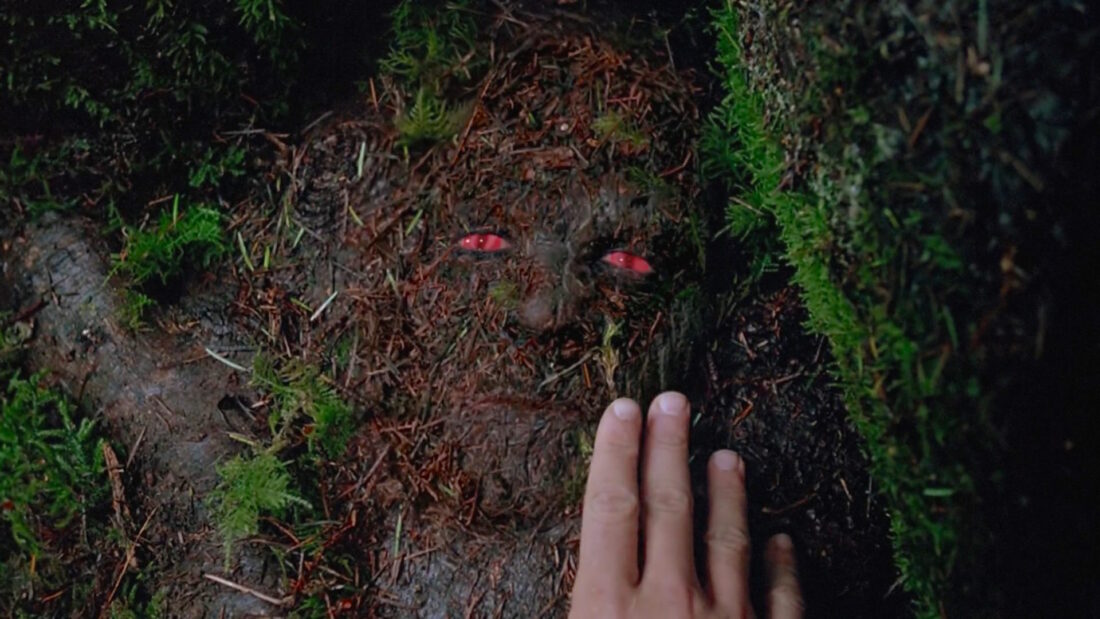
(“Detour” Season 5, Episode 4) Mulder and Scully are on their way to an FBI team-building retreat, which is, remarkably, not the monster of this episode. That honor belongs to a collection of creatures who have a Predator-like ability to blend into their surroundings to surprise their victims and make you, the viewer, regret ever romanticizing the idea of living in the woods.
This underrated episode actually captures some of the best things about The X-Files‘ greatest MOTW adventures. It’s a field trip episode (almost always a good time), it has that incredible Pacific Northwest feel (despite being set in Florida), and it nails the dread of venturing into a remote area best known as the home of a legend that locals treat as a fact. The X-Files often explored the folklore terror of cryptids, but “Detour” really captures the feeling of suddenly finding yourself surrounded by something you don’t understand and can’t possibly prepare for. The effect of the creatures’ camouflage (achieved through a blend of digital and practical techniques) is also one of the show’s most effective monster designs.
12. The Tulpa
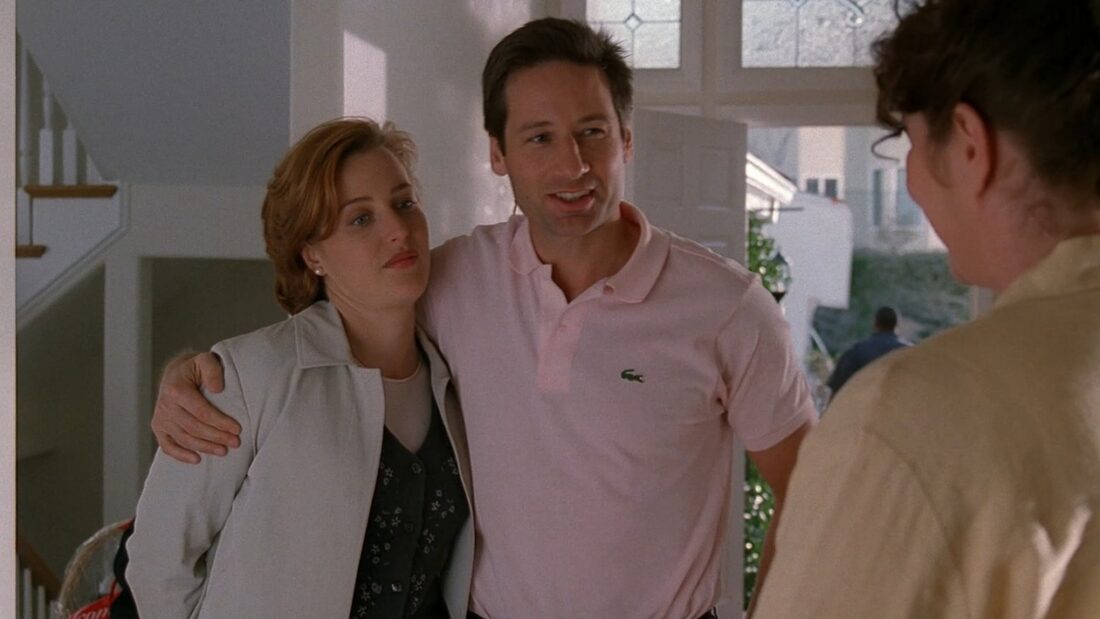
(“Arcadia” Season 6, Episode 15) The series that launched a thousand ships teases viewers with this episode that sees Mulder and Scully pose as a married couple in order to investigate strange happenings in a suburban community. Braced for the paranormal, the agents soon find themselves at the mercy of a Homeowners’ Association who needle the new residents with an increasingly inane series of rules and regulations. Though the average HOA is an effective enough monster of the week, this particular organization is ruled over by a man who is so desperate to maintain suburban order that he summons a Tulpa to enforce the group’s rules under penalty of death.
Yes, “Arcadia” is a comedy episode, but the monster at the heart of it all is the perfect payoff for a story that is otherwise content to examine the suburbs as a vacuum-sealed piece of falsely utopian Americana. Though The X-Files never shied away from using a monster to embody a message, the show rarely paid off such a premise as effectively as “Arcadia” reminds us that cul-de-sac is just another way to say dead end.
11. Eddie Van Blundht
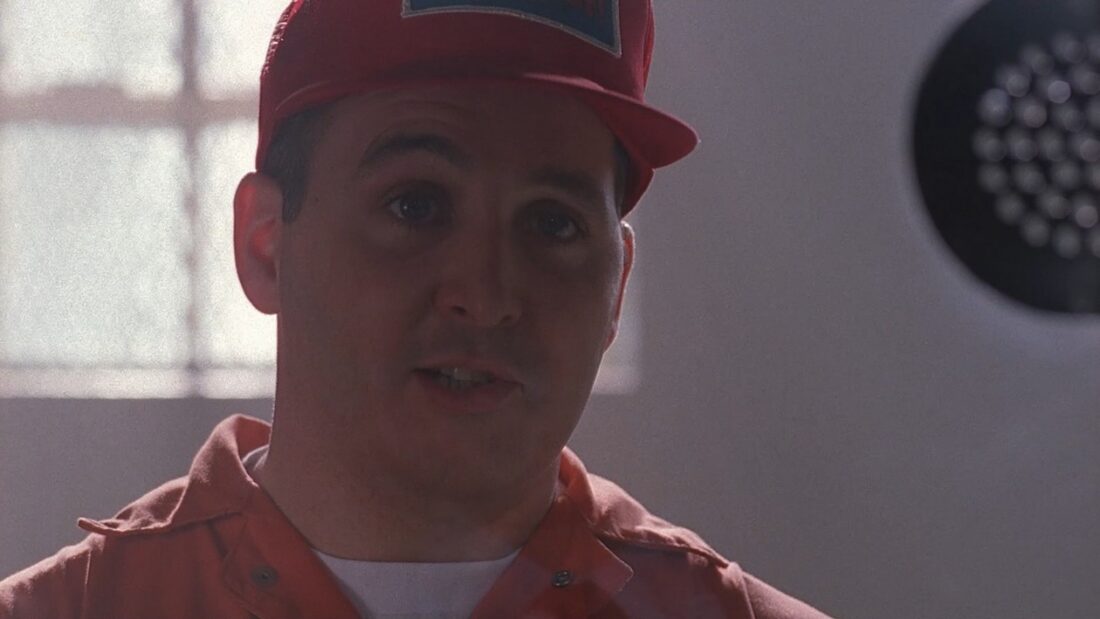
(“Small Potatoes” Season 4, Episode 20) Vince Gilligan said his primary motivation for writing “Small Potatoes” was to deliver an episode that brought some levity to the series’ especially dark fourth season and to challenge his reputation as one of the show’s most reliable sources of disturbing tales. To be fair, this is an often funny story that pokes fun at many of the show’s tropes. Specifically, it really takes a hard look at Mulder as a person in the world rather than an iconic character. Yet, it is also an episode about a man who uses his ability to manipulate his appearance to rape several women and force them to have children that share an unusual physical trait: a tail.
Watching and enjoying this episode forces you to come to terms with an intentionally comedic script based on a morbid premise that wasn’t given the weight it deserved. In that contrast, though, we find a hard truth. Perennial loser Eddie Van Blundht uses his incredible ability not to change the world or acquire great wealth but to rape and impregnate women. It is, to put a woefully inadequate word to the situation, pathetic. But it is Blundht’s pathetic nature which invokes a twisted form of pity. The horrors of his actions are dismissed by the absurdity of his abnormality and a society that is so eager to label him as pathetic or even tragic that they can’t see him for what he really is. And behind all the laughs and the feel-good main character revelations are women whose lives have been changed forever by a monster who will never be taken as seriously as he should be.
10. Luther Lee Boggs
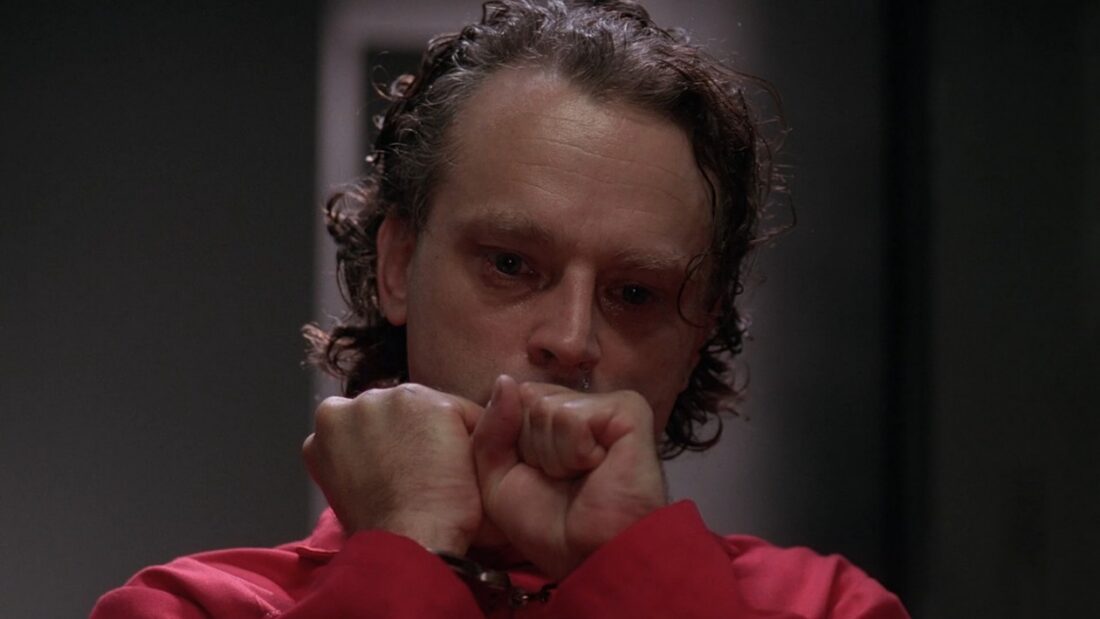
(“Beyond the Sea” Season 1, Episode 13) The X-Files often featured monsters that were ultimately just twisted men capable of horrible things. The Norman Bates-like Donald “Donnie” Pfaster is often remembered as the most effective example of such a horror. While Luther Lee Boggs is not quite as memorably terrifying as some of the show’s other serial killers, he is one of the show’s most effective examinations of the dark allure of a monster in the shape of a man that we as a culture have increasingly fallen victim to.
As portrayed by the irreplaceable Brad Dourif in what is arguably a career-best performance, Luther Lee Boggs is a death row inmate using his final days to try to convince Mulder and Scully to help him secure a commuted sentence in exchange for information. In something of a twist, it’s actually Mulder who calls out Boggs as a fraud and doubts his psychic-like ability to know things he shouldn’t. Scully, meanwhile, falls deeper into Boggs’ spell. Despite her best instincts, the very idea that Boggs could help her speak to her dead father as he swears he can is too appealing to simply dismiss. Boggs is undeniably a reflection on how easily even the wisest among us fall victim to scammers who prey on our humanity. One could also see him as a warning of the corrupted allure of the supposed brilliance of a dangerous mind that perhaps even more people fall victim to in the glorified true crime era.
9. The Parasite
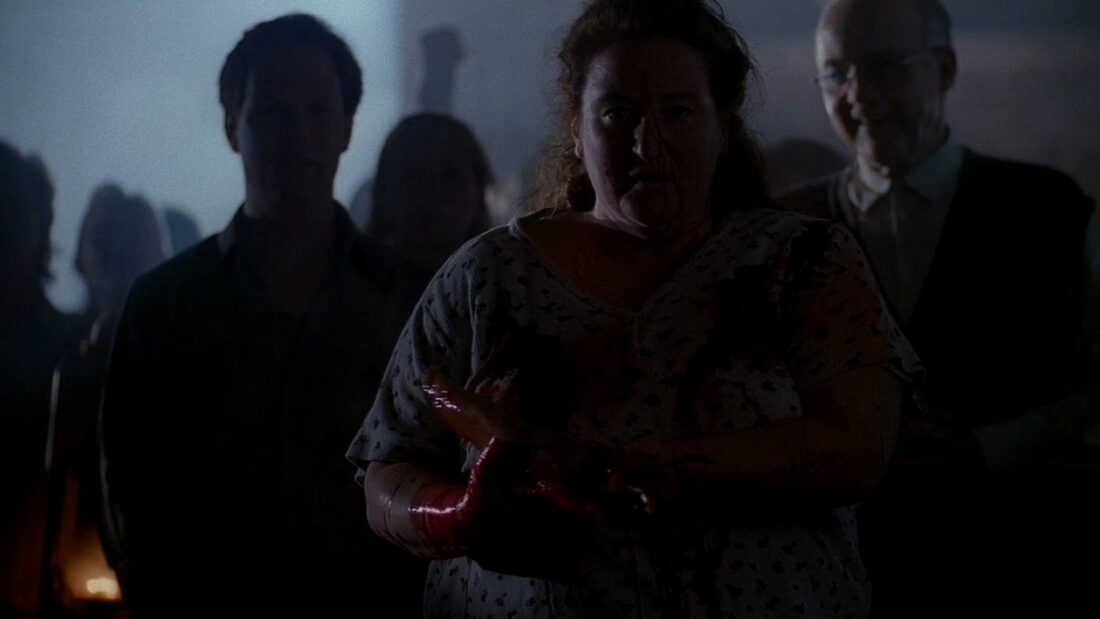
(“Roadrunners” Season 8, Episode 4) You can raise your hand if you think of The X-Files’ eighth season as “the one without Mulder.” You’re among friends here. But for all its many, many flaws, that season of the show best emphasizes the value of the monster-of-the-week format. Forced to essentially start from scratch, the show’s writers often used this season as a chance to explore some pretty wild concepts that may or may not have been tucked into the back of a drawer during previous seasons.
Vince Gilligan’s “Roadrunners” is by far the best example of such an episode. It follows Scully and Robert Patrick’s Agent Doggett as they investigate a deeply religious small town that has recently played host to a disproportionate number of strange occurrences. A familiar set-up, perhaps, though things take a turn for the bizarre when we learn that the townsfolk worship a parasitic being that they believe is the second coming of their lord. Those who harbor a childhood fear of the slug scene in Wrath of Khan will do well to steer clear of this deeply disgusting adventure that blends shock value with a generous helping of paranoia. It’s also the episode that makes Doggett a far more interesting character, though you stay for that and come for the slug.
8. The Flukeman
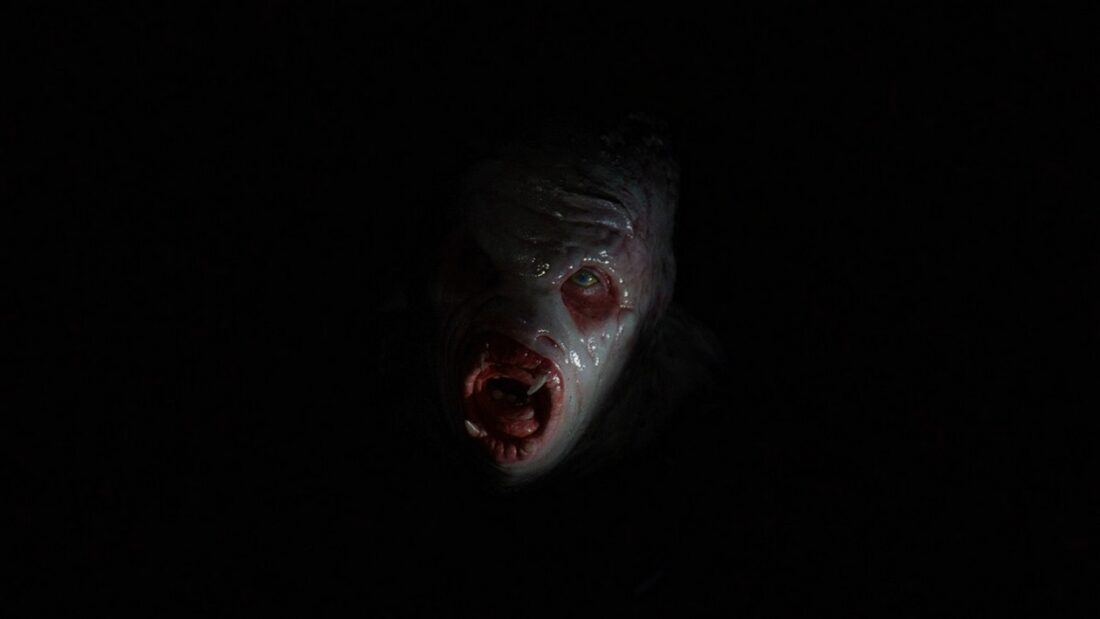
(“The Host” Season 2, Episode 2) There’s something endearing and charming about The Flukeman: a mutated skin sack of a horor that lives in the sewers of New Jersey (arguably our filthiest sewers by whatever metric you determine such honors). Though it belongs in any respectable gallery of grotesqueries, there is a purity to The Flukeman that invokes a simpler time for both The X-Files and the concept of modern monsters in general.
The Flukeman is the kind of perfect embodiment of an urban legend. It lives in a place just close enough to you (the sewers) yet far enough away from your normal life that you wouldn’t dream of actually going to look for it (the sewers). The idea of Mulder and Scully (mostly Mulder, in this instance) pursuing such a thing recalls the irresistible promise of the show’s early premise and its monster-of-the-week adventures. Here are two capable agents who are going to seriously investigate every legend you heard growing up that was never proven nor entirely disproven. It just so happens that this particular legend is very real, more terrifying than anyone could have imagined, and born of circumstances that tie in wonderfully to the show’s greater government conspiracy narratives.
7. The Mites

(“Darkness Falls” Season 1, Episode 20) Though I do not wish to find myself face-to-face with a towering skin sack monster (a statement one rarely gets the chance to make), my greatest fears are often the things I can’t quite see. That is especially true of insects. If I see a spider and fail to catch it, I will assume that it now lives under my blankets until the end of time. So yes, I do somewhat resent Chris Carter for writing this episode all about a group of loggers who encounter a group of microscopic creatures that can paralyze and cocoon you before you even know they’re there.
Strangely, this episode almost feels like a soft remake of another X-Files season one episode, “Ice.” Both deal with Mulder and Scully finding themselves trapped in an isolated area with civilians as they try to survive a terror that cannot easily be identified or fought. But rather than rely quite so heavily on paranoia, this episode ups the ante by isolating our protagonists and forcing them to outlast MICROSCOPIC BUGS THAT PARALYZE AND COCOON YOU, I CAN NOT SHOUT ABOUT THIS ENOUGH! Praised for sneakily addressing serious environmental protection topics, this episode’s greatest accomplishment may be the ways it allows you to bench your fears of global collapse just long enough to entertain a new phobia.
6. Big Blue… Sort of
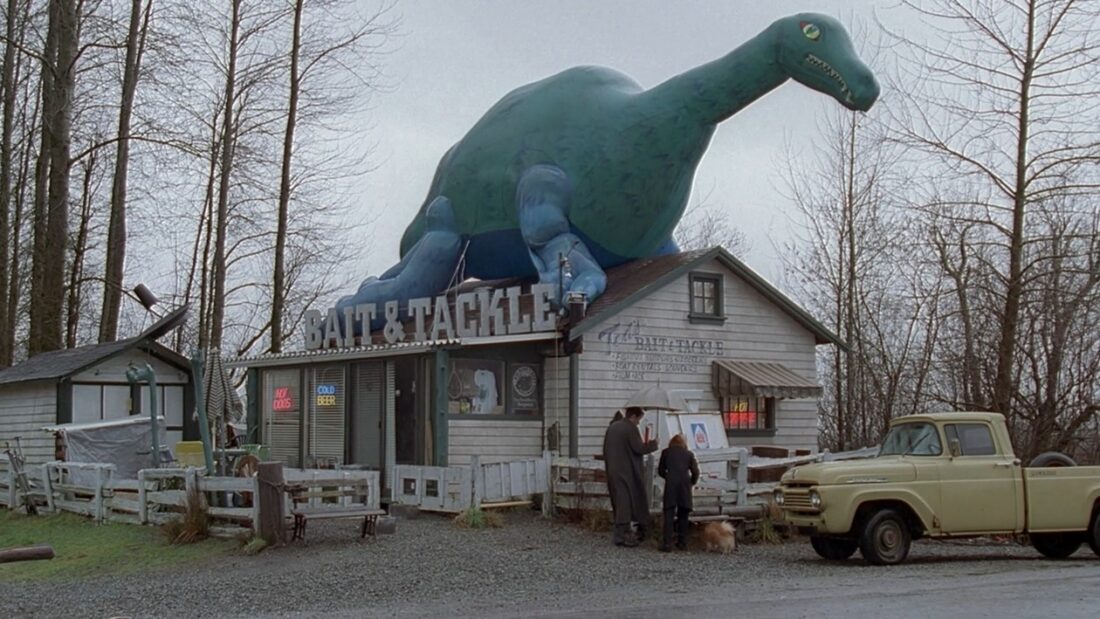
(“Quagmire” Season 3, Episode 22) Others have rightfully observed that one of the biggest problems with remaking The X-Files for the modern age is finding a way to present Mulder’s conspiratorial nature as a charming bit of skepticism rather than as the Alex Jones-like disillusionment it can sometimes read as today. Yet, it’s easy to forget that the original X-Files episodes often used MOTW episodes to counter the “truth is out there” philosophy the serialized episodes typically emphasized. In “Quagmire,” we find an essential example of the show’s writers having a little fun at Mulder’s expense.
In response to a call about missing locals, Mulder and Scully soon find themselves in a small Georgia town built around a lake that many residents believe contains a monster known as Big Blue. This information tickles Mulder who soon exhibits a charmingly childlike fascination with this potentially prehistoric entity. Yes, the very idea of that creature takes us back to a time when the National Enquirer had otherwise reasonable adults treating the Loch Ness monster as a fact. But there is something much more timeless about the sheer joy Mulder exhibits at the possibility of a camping trip that ends with an incredible discovery. This episode’s twist may take a jab at Mulder’s inability to see the forest from the trees, but its final moments pay homage to the power of a legend.
5. Greg Pincus/The Bug
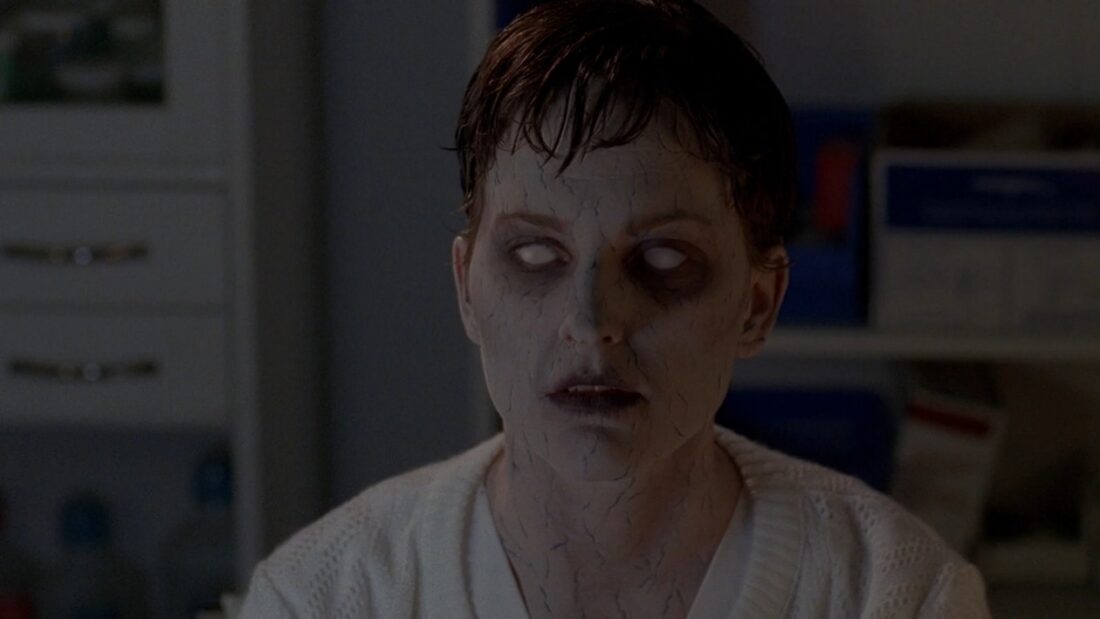
(“Folie à Deux” Season 5, Episode 19) “Folie à Deux’s” (no, not that one) greatest trick is convincing you that its monster does not exist. It begins with Mulder investigating a telemarketer’s claim that his boss is a quite literal monster who is zombifying his co-workers. Mulder’s dismissal of this claim is soon complicated by the employee’s decision to take everyone in his office, including Mulder, hostage. But before you can say “serial killer of the week,” the employee is killed shortly after “gifting” Mulder with the ability to see that Mr. Pincus is, in fact, a giant cricket-like insect in disguise.
Yes, the title of this episode gives away the early twist somewhat, but it does little to diminish the full impact of watching Mulder take a turn as the damsel in distress as Scully desperately tries to convince the rest of the FBI he is not crazy. Brilliant psychological tormenting and commentary on workplace cultures aside, this episode gets a surprising amount of mileage out of creature design that is, at a glance, somewhat ridiculous. The problems with that design and costume actually forced the team to limit its screen time, which only makes the moments when you catch a glimpse of it climbing up walls and across ceilings that much more effective.
4. Ronnie Strickland/The Vampires
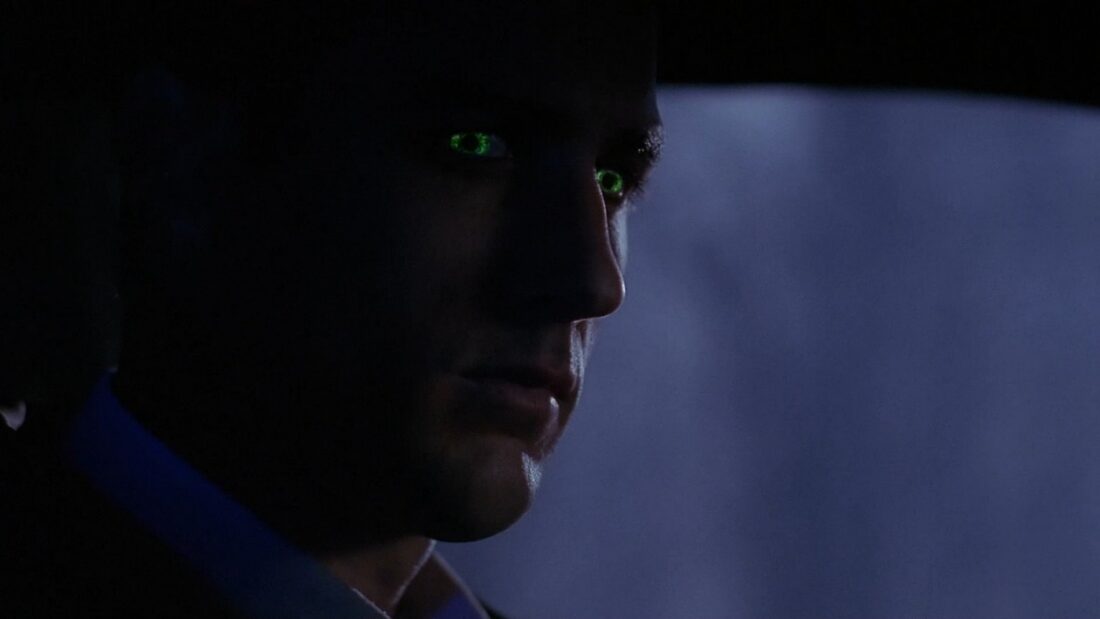
(“Bad Blood” Season 5, Episode 12) In retrospect, it’s surprising that it took The X-Files five seasons to deliver a proper vampire episode. While the legendary monsters were referenced in prior storylines, Mulder and Scully never really encountered a proper creature of the night for much of the show’s early run. But before you can Van Helsing the writers’ praises for finally delivering the real deal, the show throws an all-time great twist your way. Soon after their first encounter with the living undead, Mulder faces an internal investigation for allegedly murdering an innocent man who was only posing as a vampire.
The vampires of “Bad Blood” (yes, they are real… spoilers, I suppose) are especially effective because they toy with our tendency to dismiss claims of vampirism. Previous episodes of The X-Files cited instances of vampire-like activity only to show that such instances were, in fact, the result of something else. The nomadic and secretive vampires of “Bad Blood” survive on the idea that we are not prepared to recognize and accept what they really are. When we are forced to confront the indisputable, we find a classic, almost cliche concept that is somehow more terrifying than ever.
3. The Peacock Family
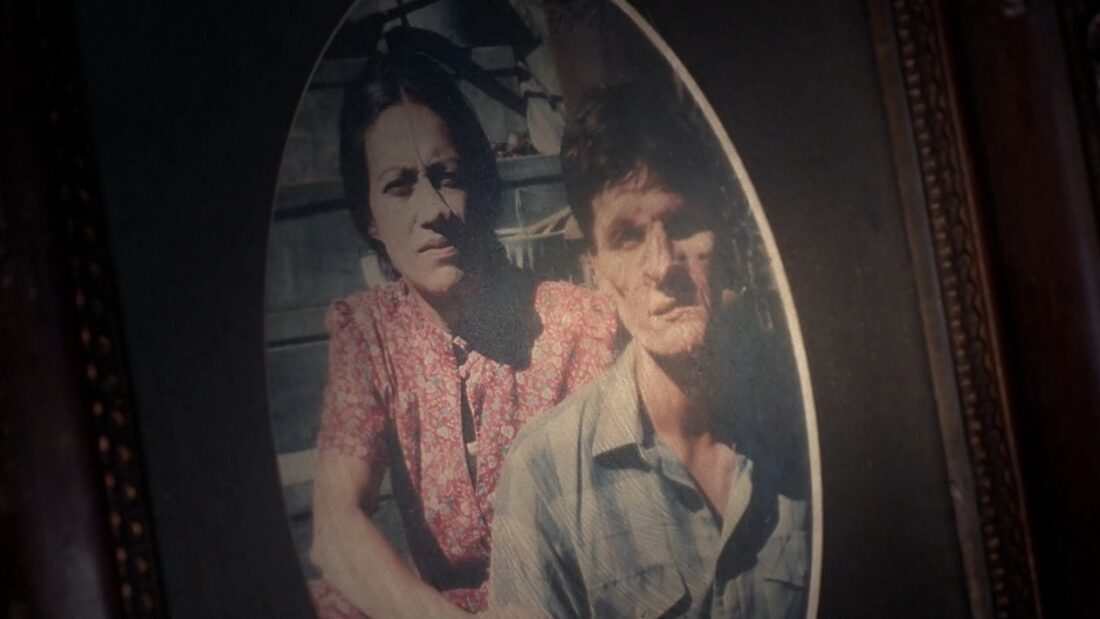
(“Home” Season 4, Episode 2) Throughout the ‘90s, we saw the rise of edgier media in film, television, and music that capitalized on a series of cultural trends, which pointed towards a growing hunger for shock value. The idea was to test the limits of what you could get away with to see how many people would watch you do it. Much of the edgy media from that era has aged like that high school yearbook photo. On the surface, this formerly “banned” episode of The X-Files about mutant, hillbilly, inbred murderers sounds like a prime example of one of those things that takes you back to a different time in the worst way possible.
But “Home” was, remains, and perhaps will forever be a genuinely terrifying piece of television. The Peacocks, for all their James Patterson-like obviously cheapily creepy characteristics, feel like something from a different world in a show that is hardly unfamiliar with the concept of extraterrestrial visitors. It’s as if Mulder and Scully suddenly find themselves investigating the antagonists of a particularly seedy ‘70s grindhouse movie when they expected to find another X-Files episode. Do you know what’s really funny? One of the episode’s writers (James Wong) has arguably tried for years to recapture the pure terror of this deeply disturbing clan and their fondness for wholesome music that doubles as a prelude to their next atrocity. Yet, little that has followed in this episode’s footsteps can match its visceral effectiveness.
2. Eugene Tooms
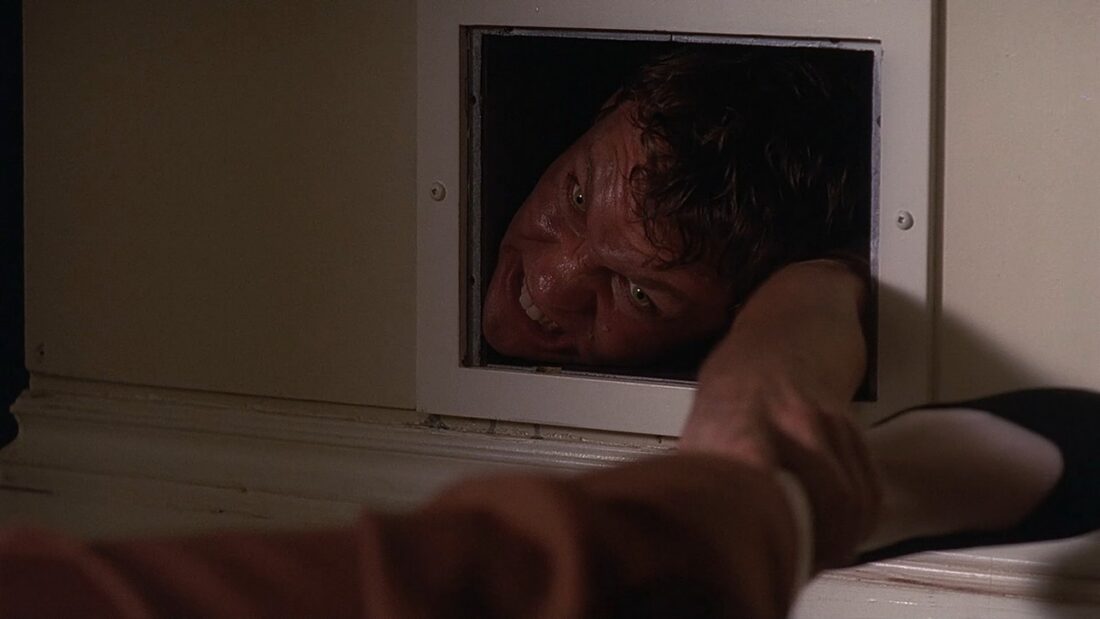
(“Squeeze” Season 1, Episode 3; “Tooms” Season 1, Episode 21) Eugene Tooms is, in fact, a monster of two weeks: a rare honor given to X-Files horrors that appeared in multiple episodes. He is also the show’s first proper monster of the week, which ended up being a bit of a double-edged sword for the series. Though Tooms demonstrated the potential of that idea incredibly early on, he also set a precedent for that concept that the series wouldn’t top for quite some time (if ever).
Eugene Tooms has the remarkable ability to manipulate his body in ways that allow him to fit into the most unlikely of places. In his debut episode, we discover that Tooms navigated through a ventilation system to eat a man’s liver (how very Hannibal of him). Yes, Tooms is ultimately just a man. We learn as much from Agent Scully who quickly establishes her willingness to shoot down Mulder’s paranormal theories even at the cost of overlooking some really weird shit. But our introduction to that man is quite simply the scariest episode of television many had ever seen up until that point, and arguably the most grotesque. History lessons aside, Tooms remains an undeniably effective example of a kind of monster just absurd enough to inspire unspeakable dread yet not quite unbelievable enough to ensure you don’t find yourself thinking twice about him when you hear a noise off in the distance in a room where nobody should be.
1. The Cockroaches
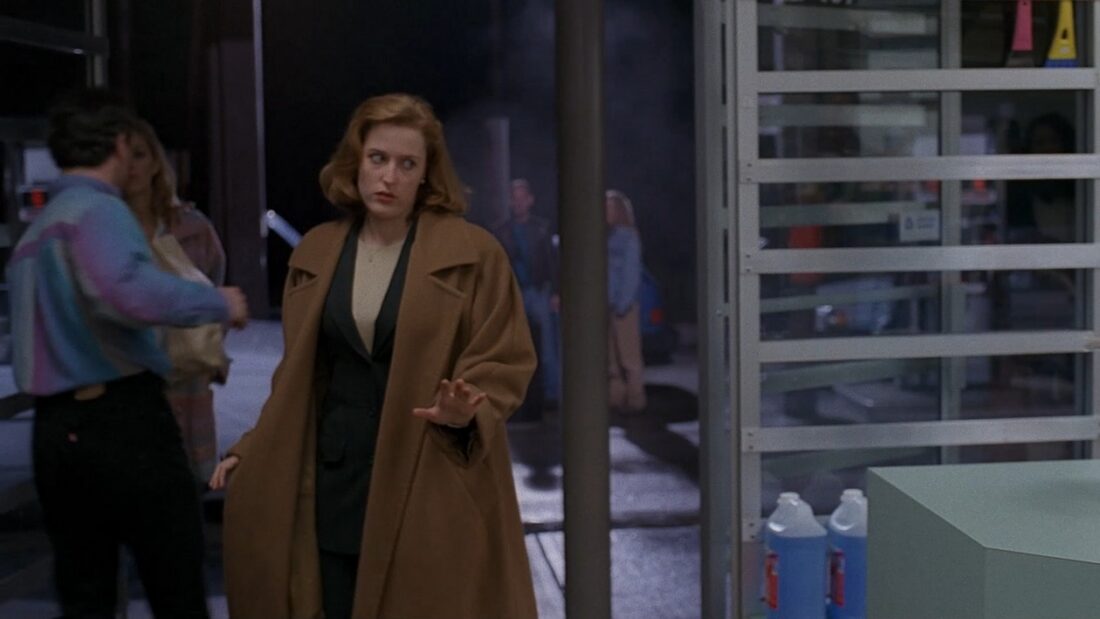
(“War of the Coprophages” Season 3, Episode 12) “The only thing we have to fear is fear itself” is one of those quotes that seems to reveal a powerful truth about the human condition, but falls apart the moment you consider the cockroach. The only thing worse than suddenly seeing a cockroach scurrying across the floor is remembering that those bugs are most commonly associated with the widely accepted myth that they can survive a nuclear war. They are disgusting, fast, and possess an aura of invincibility. So when Mulder and Scully are called to investigate a small community that lives in fear of an apparent super breed of cockroaches… well, no explanation needed.
Except, this really is a story about the fear of fear itself. It’s not that this town doesn’t have a roach problem. It’s just that its residents (and at least one of its visiting agents) soon find themselves succumbing to a bit of mass hysteria that is ultimately disproportionate to the problem at hand. These cockroaches perfectly represent real-life incidents of mass hysteria and moral panic which often begin with a kernel of truth that explodes into something else entirely. In that sense, they, and the various ways they are interpreted and perceived throughout this episode, represent the very idea of monsters the show’s MOTW episodes were based on. But they are also still cockroaches.

I always prefered the Monster of the Week episodes to the increasingly byzantine UFO conspiracy eps.
And, yes, “Home” is my favorite episode.
“War of the Coprophages” provided one of my single favorite experiences with X-Files, when they projected a cockroach seemingly crawling across the TV screen inside your own room. I sat up very straight, then laughed out loud.
I loved Mulder’s office location …
I worked with a couple of communications engineers (for a steel company that no longer exists) who had office down-in-the-basement … literally. You walked down stairs and found yourself in a narrow hall … made more narrow by some dusty filing cabinets full of paperwork that nobody remembered … and then came to the offices of the two engineers.
This was in the early 1990s … before the ‘X-Files’ began … else I’m sure that I would have made-the-connection to Mulder’s office.
Remember … in one of the first 2 or 3 years of the X-Files … there was a show where Scully & Mulder went to investigate some Air Force pilots who had ‘disappeared’ after flying some sort of experimental aircraft. The wives of the pilots couldn’t get the Air Force to tell them where their husbands were … and then one showed-up at home with severe mental and physical problems.
The planes were being flown from an air base that was not in the desert southwest (i.e. not ‘Area 51’) but rather in a part of the country that supported lush plant & tree growth.
Scully & Mulder drove along the perimeter of the base (a chain link fence with all sorts of warning signs) and found a place to partially obscure their location and then waited until evening. They found a couple of teenagers sneaking out of the air base (through a part of the chain link fence that was pulled-back). Mulder (with Scully tagging along) took the teens to a burger joint where he plied them with questions.
The teens told Mulder that there was a place on the base (several miles in from the fence) where they’d seen some very peculiar things.
OK … so Mulder sneaks onto the base … and gets caught ….
Now … years later ….. in the 2016-ish episode ‘Scully & Mulder Meet The WereLizard ‘ (which I think is a parody on ‘Abbott & Costello Meet The Wolf Man’ )
The show begins with a couple of ‘adults’ sniffing’ paint out of a paper bag ….
Those two paint-sniffers were the same actors who’d been the teens in that earlier X-Files show.
My favorite episode was a “MotW” with no monster, “Clyde Bruckman’s Final Repose”. Easily the high point of the series.
Best episode of the show. And if other serial killers like Donnie Pfaster, Gerry Schnauz or Luther Lee Bogs can be classed as monsters, then the killer from this one certainly can be.
His schtick of murdering fake psychics so he can find a real one to tell him why he’s a murderer is great. As is the payoff.
“You do the things you do because you’re a homicidal maniac.” “That explains a lot, actually.”
I thought that your mention of Donnie Pfaster was just to hint at him and then bring him out later. His first episode was goddamn creepy.
‘The Peacock Family” episode has haunted me for years. I’m not sure why – possibly because it took a normal disgusted reaction to incest and made it worse by showing a de-evolution to actual monstrosities worse than even the Hapsburgs – but I have never been able to get it out of my head.
Runner up has to be Mr. Burns being mistaken for an alien on The Simpsons, Season 8 Episode 10 – The Springfield Files. You get cameo’s from Duchovny and Anderson and Leonard frickin Nimoy.
Shout out to the pre-Last of Us use of a Cordyceps-like infection (in the PNW, as I recall) that involved some maybe let’s isolate in case we create a pandemic energy. Not maybe the best MOTW–I think you hit most of my favorites, but honestly, the MOTW episodes were usually more fun overall–but still, creepy. And pre-Last of Us.
Good list. Obviously there’s a lot to choose from, but I’m a little surprised not to see Robert “Pusher” Modell – surely one of the best human “monsters” in the entire series’ run.
I started watching X-Files when it came out, when I was on the tail end of six, after being introduced to it by a neighbour. (She was my grown-up friend at eight years old.) Darkness Falls aired when I was seven. It, uh. It left an impression.
I’d also like to put in a good (and slightly terrified) word for Chinga, which came out when I was eleven.. and an avid collector of porcelain dolls :’) Thanks, Stephen King!!
Something I love about the vampires in “Bad Blood” is that they’re normal people. Eerily normal. They’re friendly, neighborly, helpful, and they even pay taxes. It’s that kind of creepily mundane and banal paranormal the series had at its best. The list includes some good examples of this (“Arcadia”, “Folie a Deux”), and even some of the more flawed episodes do it well, like Bruce Campbell’s utterly monstrous and evil demon who has no ambitions beyond being a normal suburban dad.